
Lamb stew is more than just a meal; it’s an experience. When the weather turns chilly, or you need a dinner that feels like a warm hug, nothing beats the rich, velvety broth and “melt-in-your-mouth” tenderness of perfectly braised lamb.
While many people shy away from lamb because they fear it might be “gamey” or tough, the secret lies in the technique. By combining traditional French braising methods with modern comfort-food twists (like adding smoky bacon and a red wine deglaze), we’ve created a recipe that outshines any standard beef stew.
In this guide, we will break down the science of choosing the right meat, the art of layering flavors, and the foolproof “low and slow” method to ensure success every single time.
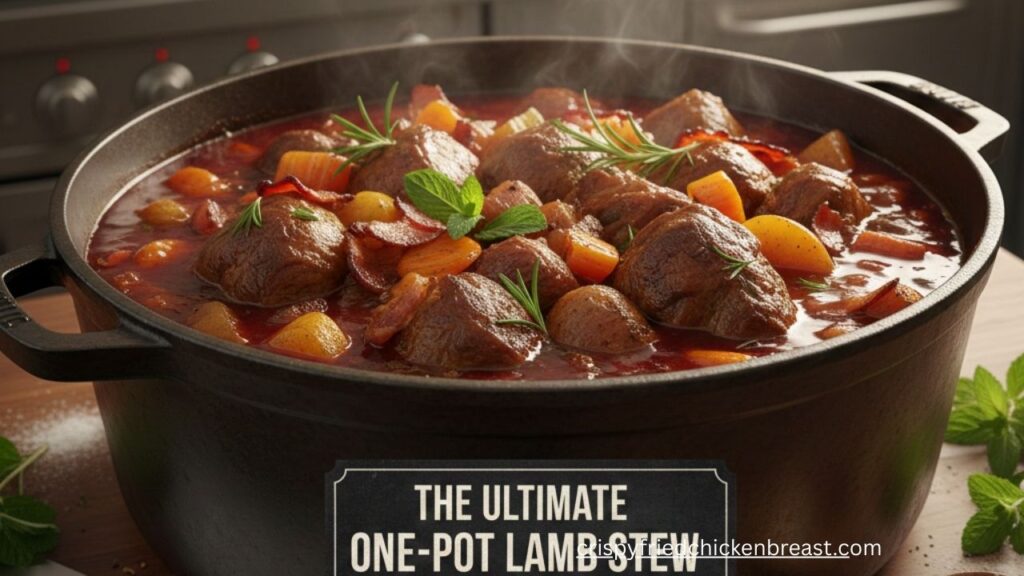
Why Lamb Stew is Different (And Better) Than Beef Stew
Beef stew is a classic, but lamb offers a depth of flavor that is naturally sweeter and more robust. Lamb contains a specific type of fat that, when rendered slowly, creates a silky mouthfeel that beef simply cannot replicate.
Furthermore, lamb pairs beautifully with aromatic herbs like rosemary and mint, making the flavor profile more complex and “gourmet” without requiring extra effort in the kitchen.
Choosing the Best Cut: The Secret to Tenderness
The biggest mistake home cooks make is using the wrong cut of meat. For a stew, you don’t want expensive, lean cuts like the loin. You need cuts with connective tissue (collagen) that break down into gelatin during the cooking process.
Lamb Shoulder (The Gold Standard)
The shoulder is the most flavored part of the animal. It has enough fat to stay moist during a 2-hour simmer and enough collagen to thicken the gravy naturally.
Leg of Lamb (The Leaner Option)
If you prefer a meatier, less fatty stew, the leg is a great choice. However, it can dry out if overcooked, so it requires a slightly shorter simmering time or a very consistent low temperature.
| Feature | Lamb Shoulder | Leg of Lamb |
| Fat Content | High (Flavorful) | Moderate (Leaner) |
| Texture | Very Tender/Shreddy | Firm but Soft |
| Best For | Long Oven Braises | Stovetop Simmering |
Ingredients: The Anatomy of a Perfect Stew
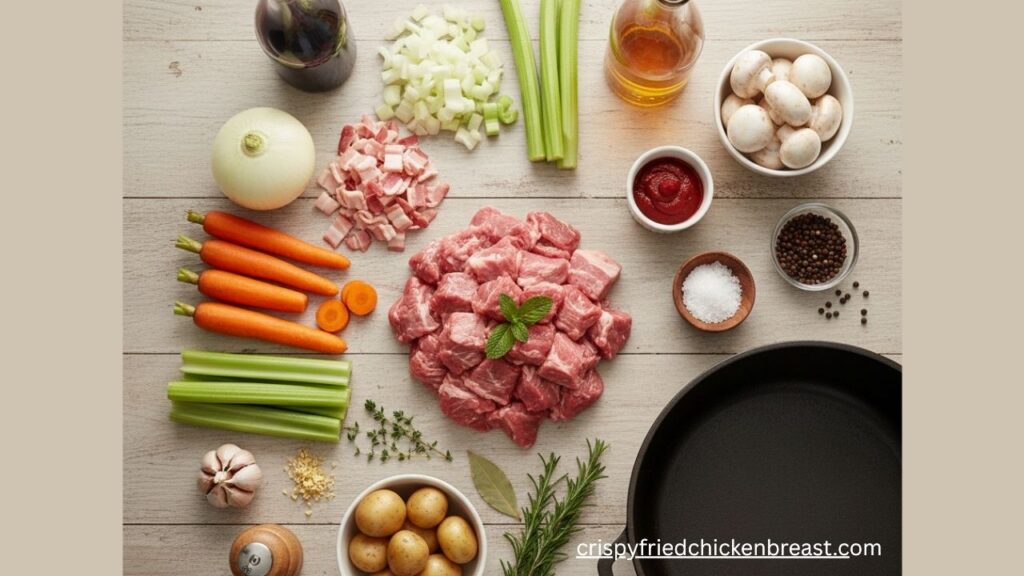
To make a 5-star stew, you need high-quality ingredients. Here is what you’ll need for 6 to 8 generous servings:
The Proteins
- 2 tbs Lamb Stew Meat: Cubed into 1.5-inch chunks.
- 4 oz Thick-cut Bacon: Chopped. (This provides the initial fat for searing and a smoky undertone).
The Vegetables (The Mirepoix)
- 1 Large Yellow Onion: Diced small.
- 3 Large Carrots: Cut into thick 1-inch rounds.
- 2 Stalks Celery: Chopped.
- 1 lb Baby Yukon Gold Potatoes: Halved. (These stay firm and buttery).
- Optional: 8 oz Button Mushrooms for an extra earthy “umami” punch.
The Flavor Liquids
- 1.5 Cups Dry Red Wine: Cabernet Sauvignon or Merlot works best.
- 4 Cups Low-Sodium Beef Broth: Provides the backbone of the sauce.
- 1 Tbsp Tomato Paste: For color and depth.
- 1 Tbsp Worcestershire Sauce: The secret “salty” kick.
Aromatics & Spices
- 4 Garlic Cloves: Minced fresh.
- 2 Bay Leaves.
- 1 tsp Fresh Thyme & 1 Sprig of Rosemary.
- Salt and Freshly Ground Black Pepper.
Step-by-Step Instructions: Mastering the Technique
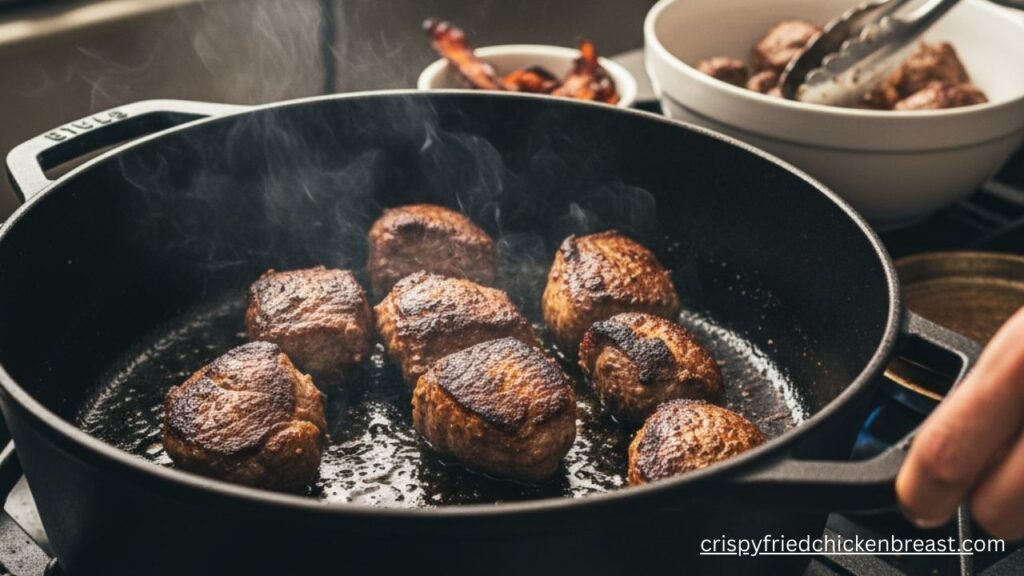
Step 1: The Power of the Sear
Most people make the mistake of boiling the meat in the broth. This results in gray, rubbery lamb.
- In a large Dutch oven, cook the chopped bacon over medium heat until the fat has rendered and the bacon is crispy. Remove the bacon and set it aside.
- Pat the lamb dry with paper towels (moist meat won’t brown). Season with salt and pepper.
- Increase heat to medium-high. In the remaining bacon fat, sear the lamb in batches. You want a deep brown crust on at least two sides.
Remove the meat and set it aside
Step 2: Sautéing the Aromatics
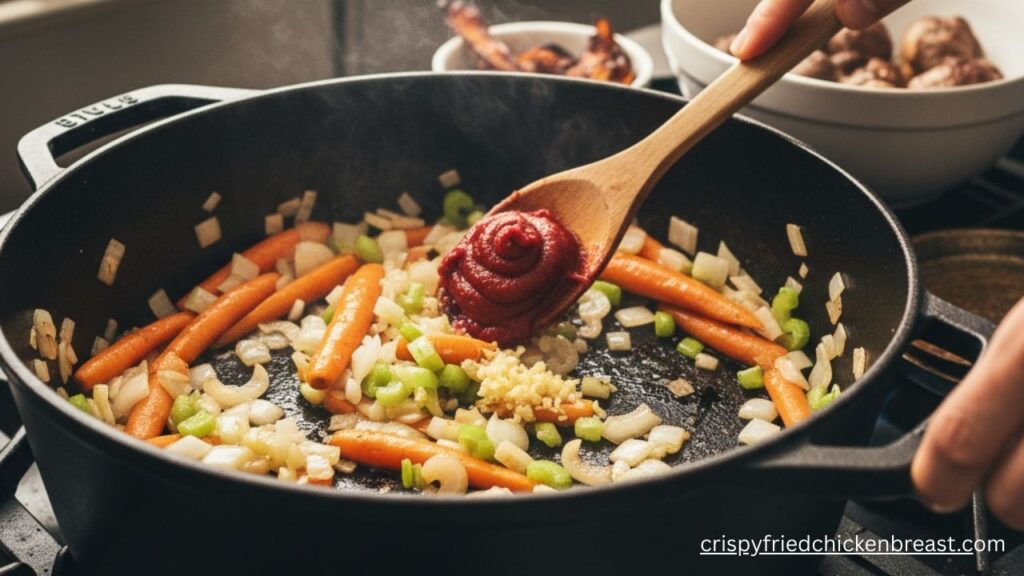
Don’t wash the pot! Those brown bits at the bottom (called the fond) are concentrated flavor.
- Add the onions, carrots, and celery to the pot. Sauté for 5-7 minutes until the onions are translucent.
- Stir in the minced garlic and tomato paste. Cook for 2 minutes. The tomato paste should turn from bright red to a dark maroon-this caramelization process is vital for a rich gravy.
Step 3: Deglazing with Wine
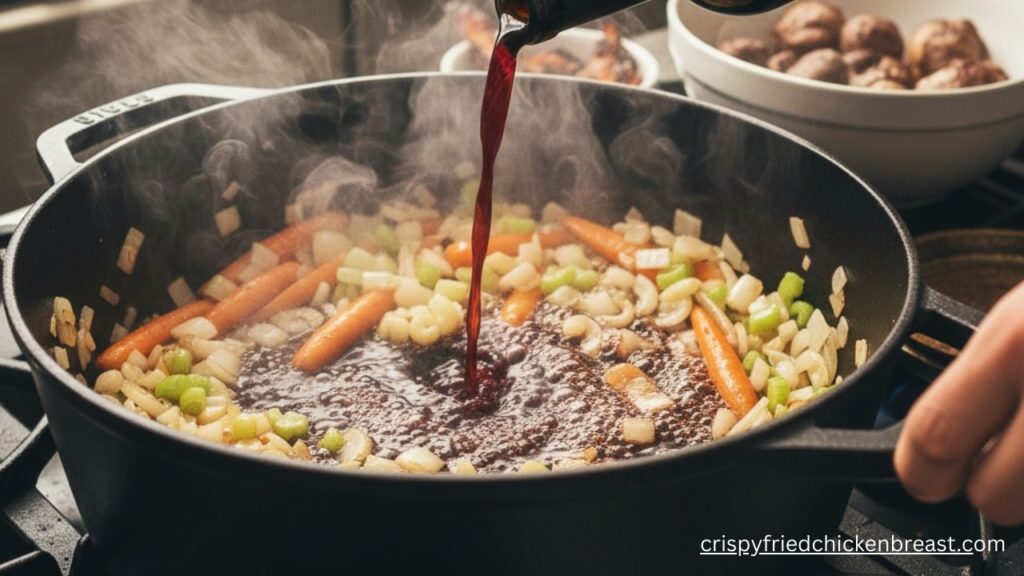
This is the “Chef’s Secret.” Pour in the red wine while the pot is hot. Use a wooden spoon to scrape all the brown bits off the bottom. Let the wine reduce by half (about 5 minutes). This removes the harsh alcohol smell and leaves behind a sweet, complex syrup.
Step 4: The Long Braise
- Return the lamb and bacon to the pot.
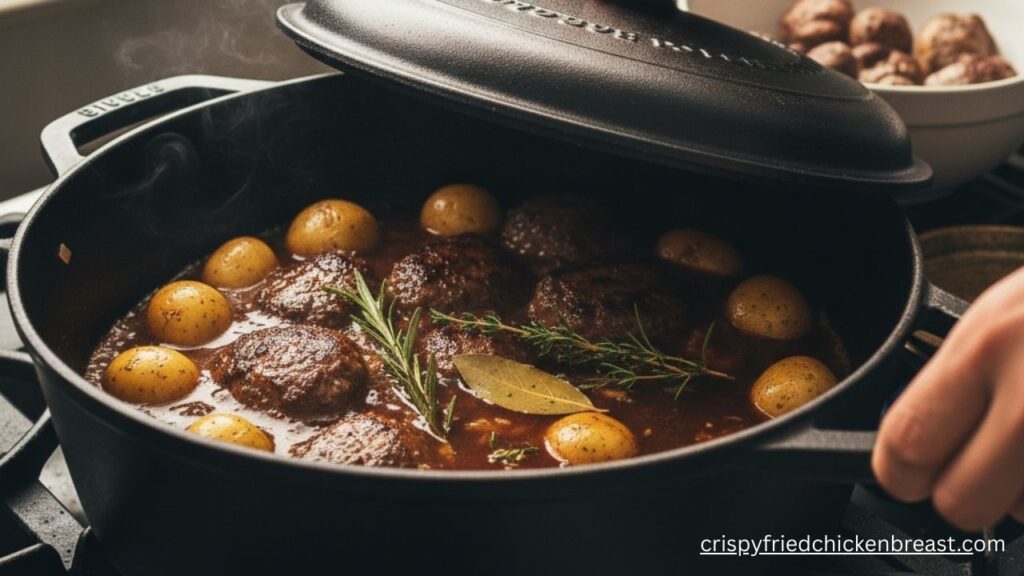
- Add the beef broth, Worcestershire sauce, bay leaves, thyme, and rosemary.
- Add the potatoes, ensuring they are mostly submerged in the liquid.
- The Oven Method (Recommended): Cover the pot with a tight-fitting lid and place it in a preheated oven at 325°F (165°C) for 1 hour and 45 minutes. The oven provides surround-heat, which cooks the meat more evenly than the stove.
How to Achieve the Perfect Consistency
A great lamb stew should have a sauce that coats the back of a spoon. If your stew looks too thin (watery) at the end of the cooking time, don’t panic. You have three options:
- The Potato Mash: Take 2 or 3 of the cooked potato chunks and mash them against the side of the pot. Stir them back in. The natural starch will thicken the sauce instantly.
- The Cornstarch Slurry: Mix 1 tbsp of cornstarch with 1 tbsp of cold water. Stir it into the boiling stew for 1 minute.
- The Traditional Roux: As mentioned in some classic recipes, you can whisk in a butter-flour paste, but the potato method keeps the flavor cleaner.
Variations: From Irish to Moroccan
While this is a “traditional” American-style lamb stew, you can easily pivot the flavors:
- Irish Style: Replace the red wine with a bottle of Guinness Draught (Stout).
- Moroccan Style: Omit the bacon and rosemary. Add 1 tsp of Cumin, 1 tsp of Ginger, and 1/2 tsp of Cinnamon. Stir in some dried apricots or chickpeas 20 minutes before finishing.
- Spring Version: Add frozen peas and fresh mint leaves right before serving for a bright, green finish.
Serving Suggestions: What Pairs with Lamb Stew?
Because this is a one-pot meal containing protein, fats, and carbs (potatoes), you don’t need much else. However, to elevate the experience:
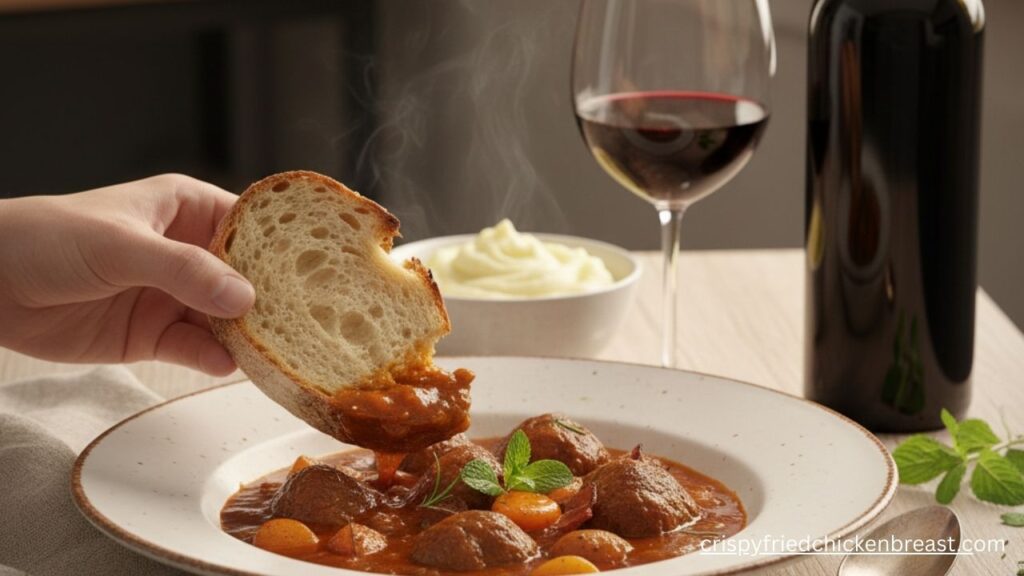
- Crusty Sourdough: Essential for mopping up the gravy.
- Mashed Cauliflower: If you want to skip the potatoes in the stew for a lower-carb option.
- A Bold Red Wine: Serve the same wine you used for cooking (e.g., a Malbec or Syrah).
Frequently Asked Questions
Why is my lamb stew meat still tough?
If the meat is tough, it simply needs more time. Lamb shoulder has a lot of “work muscle” that only softens once the internal temperature reaches a point where collagen turns into gelatin. Give it another 15–20 minutes in the oven
Can I make this in an Instant Pot?
Yes! Follow the searing and sautéing steps on the “Sauté” setting. Then, pressure cook on High for 35 minutes followed by a 10-minute natural pressure release.
How do I store and reheat leftovers?
Lamb stew actually tastes better on the second day! Store in an airtight container for up to 4 days. When reheating, add a splash of water or broth, as the sauce will thicken significantly in the fridge.
Conclusion: Your New Sunday Tradition
Making a great lamb stew isn’t about fancy equipment; it’s about patience and layering flavors. By browning the meat properly, deglazing with wine, and allowing the oven to do the heavy lifting, you create a meal that tastes like it came from a high-end French bistro.
Give this recipe a try this weekend, and don’t forget to share your results with us!
Author

One-Pot Lamb Stew: A Masterclass in Comfort Food
Learn how to make the perfect Lamb Stew at home. This easy one-pot recipe uses simple ingredients to create a bold, deep flavor. Perfect for dinner or meal prep.
Recipe Ingredients: